Robot Design: Defining Your Brand with a High-Tech Typeface
There’s a moment in any creative project where you need to stop whispering and start declaring. You’ve developed a great product, written a compelling service description, or crafted a narrative that deserves attention, but standard typography just won't cut it. If you are working on a project that leans into the future—whether it’s a tech startup, a gaming channel, a sci-fi novel, or a streetwear line—you need a visual voice that sounds like it was built in a lab, not just typed on a page. Enter the realm of display typefaces, where the font does more than just convey information; it sets the atmosphere.
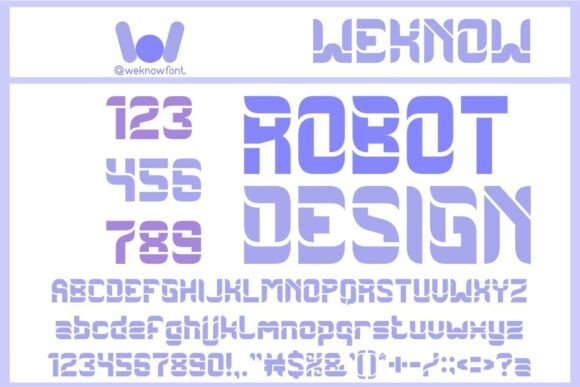
The "Robot Design" typeface is a prime example of this techno-infused aesthetic. It isn't just a collection of letters; it is a visual representation of android engineering and high-tech science fiction. When you look at the character set, you see sharp angles, geometric precision, and a structural integrity that feels mechanical yet fluid. This is the kind of font that grabs the viewer by the collar and pulls them into a futuristic world. It bridges the gap between the industrial weight of heavy machinery and the sleek minimalism of modern interface design.
Aesthetic Power and Visual Appeal
What makes a typeface like Robot Design visually appealing in a crowded market? It comes down to its unique silhouette. Unlike standard sans-serif fonts that prioritize neutrality, this display font demands to be seen. It carries the weight of a premium font but with a specific stylistic flair that suggests movement and innovation.
The visual characteristics are rooted in a high-contrast geometry. Think of the way light reflects off a chrome chassis or the glowing lines on a heads-up display (HUD). This typeface captures that energy. It balances negative space with bold strokes, ensuring that even though the design is complex, it remains legible at large scales. It’s the perfect tool for logo design where you need to establish a brand identity that feels authoritative, cutting-edge, and distinctly modern.
Practical Applications: From Screen to Print
One of the biggest challenges designers face is finding a font that works across different mediums. A typeface that looks great on a website header might fall flat on a t-shirt. However, the structural nature of Robot Design makes it incredibly versatile for specific creative verticals.
For social media graphics, particularly on platforms like YouTube or Instagram, attention spans are short. You have milliseconds to make an impression. Using this font for thumbnails, channel banners, or story highlights creates an immediate "tech" or "gaming" vibe. It signals to the viewer that the content is modern, perhaps involving reviews, tutorials, or entertainment in the sci-fi niche.
In the realm of packaging design, this typeface shines for products that want to emphasize innovation. Imagine a new line of electronics, a synthetic beverage, or even a modern furniture collection. The font adds a layer of perceived value and sophistication. It tells the customer that the product inside is engineered with precision.
For editorial design, such as magazine covers or book headers, Robot Design can be used to create striking titles. It is particularly effective for genres like cyberpunk, space opera, or techno-thrillers. It sets the tone before the reader even flips to the first page.
Strategic Branding and Identity
Choosing the right typeface is a strategic business decision, not just an artistic one. Your font is a core component of your brand identity. It is the visual thread that ties your website to your business cards, your app interface to your merchandise.
If your brand personality is defined by innovation, speed, or futurism, a serif font or a traditional sans serif font might feel too conservative. Robot Design offers a distinct alternative. It allows small business owners and entrepreneurs to compete with the visual language of major tech giants without looking like a copycat. It provides a unique footprint.
Consider the "unboxing" experience. If you are selling high-tech gadgets or gaming accessories, using this font on your box art, instruction manuals, and warranty cards creates a cohesive experience. It reinforces the idea that every part of the product has been thoughtfully designed. This consistency builds trust and recognition over time.
Pairing and Readability: Best Practices
While a display font like Robot Design is powerful, it requires a thoughtful approach to typography hierarchy. Because it is so stylistic, it is best used for headlines, logos, and short bursts of text. Trying to use it for long-form body copy would likely result in fatigue for the reader.
This is where font pairing becomes essential. To let Robot Design truly shine, you need to pair it with something that gets out of the way. A clean, geometric sans serif font for your body text works wonders. The contrast between the complex, mechanical headlines and the clean, readable body text creates a professional balance.
Here are a few practical tips for implementation:
- Scale Matters: This font loves to be big. Give it room to breathe on the canvas. Cramping it into a small sidebar will lose its impact.
- Color Psychology: It pairs exceptionally well with neon greens, electric blues, and stark whites against dark backgrounds. Think "cyber" palettes.
- Spacing: Because of its geometric nature, you might need to adjust your kerning (letter spacing) slightly depending on the specific letter combinations to ensure visual harmony.
Licensing and Asset Management
Before incorporating any new typeface into a commercial project, it is vital to understand the licensing. A commercial font typically requires a license that covers the specific ways you intend to use it. For example, embedding a font in an app or software product often requires a different license than using it on a static website or printed merchandise.
When you acquire a high-quality design asset like this, check if it includes different weights or styles. Does it have a bold version? An italic version? Having these variations allows for more nuanced web design and editorial layouts. Always review the terms to ensure you are compliant, especially if you are scaling your business or distributing digital products that include the font files.
Ultimately, Robot Design is more than just a creative font; it is a design tool that helps bridge the gap between imagination and visual reality. For the designer looking to inject some high-octane energy into their work, or the business owner aiming to define a futuristic brand, it offers a distinct path forward. It’s about invoking the future, one glyph at a time.