Yumikaze: Where Bold Geometry Meets Japanese Aesthetic
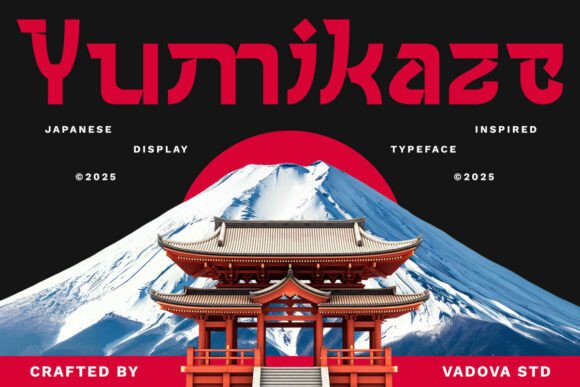
There’s a certain tension in Japanese design that’s endlessly compelling—the balance between minimalism and maximalism, tradition and the avant-garde, the organic and the engineered. Capturing that energy in a typeface is no small feat, yet that’s precisely what the Yumikaze font achieves. It’s a display typeface that doesn’t just sit on a page; it commands attention. For anyone working on a project that needs to feel both culturally resonant and unmistakably modern, this font offers a distinctive voice that’s hard to ignore.
A Typeface with a Point of View
At its core, Yumikaze is built on bold, geometric foundations. The letterforms are clean and structured, but they’re sharpened with details that feel distinctly contemporary. Think of the crisp edges of a katana blade translated into typographic strokes, or the confident lines of a modern skyscraper influenced by traditional temple architecture. This isn’t a decorative font that leans on clichés like bamboo motifs or overly ornate brushstrokes. Instead, it abstracts the essence of Japanese visual culture—its precision, its love of negative space, its bold graphic contrasts—into a functional and versatile tool. The result is a typeface that feels authoritative yet approachable, culturally specific yet universally appealing.
What makes it work so well in practical applications is its legibility. Despite its strong character, each letter is crafted with clarity in mind. This is crucial because a display font, no matter how striking, fails if it can’t be read at a glance. Yumikaze walks that line expertly, making it suitable for everything from a storefront sign to a social media header where you have about two seconds to make an impression.
From Brand Identity to Streetwear Labels
The true test of a premium font is how it performs across different creative contexts. Yumikaze’s design DNA makes it incredibly adaptable. For a brand strategist developing a visual identity for a new Japanese-inspired restaurant, this typeface can set the tone immediately. It suggests authenticity and modernity without having to rely on stock imagery. Pair it with a clean sans-serif for body text on menus and signage, and you’ve got a cohesive system that feels intentional.
For entrepreneurs in the fashion or streetwear space, Yumikaze becomes a powerful design asset. Its bold shapes translate perfectly onto garment labels, hang tags, and the graphics printed on clothing itself. Imagine it on the back of a hoodie or the sleeve of a jacket—it delivers that sought-after “logo” feel that’s both graphic and culturally nuanced. Similarly, for event promoters or music producers, it’s a natural fit for album covers, festival posters, and merchandise. The font carries an inherent energy that suits creative, high-impact projects.
Practical Pairings and Project Planning
Choosing the right font is only half the battle; knowing how to use it is what separates good design from great design. When working with a strong display font like Yumikaze, the key is contrast and hierarchy. You rarely want to use it for long paragraphs of text. Its strength is in headlines, logos, and key phrases. The real magic happens when you pair it.
For a website design, consider using Yumikaze for your main navigation headings and hero section titles. Then, balance it with a highly readable sans-serif or a simple serif font for your body copy. This creates a clear visual hierarchy that guides the visitor’s eye. In editorial design, like a magazine spread or a blog header, Yumikaze can frame the story with a powerful title, while a more neutral typeface handles the storytelling.
Always test your font pairings in the context of your actual content. Does the combination feel harmonious or jarring? Is the contrast effective? Does the display font overshadow the message or enhance it? A practical tip is to mock up your design with real text, not just “Lorem ipsum,” to see how the typography interacts with the words you’ll actually use.
Navigating Licensing and Versatility
Before you fall in love with any commercial font, it’s wise to understand its licensing. Yumikaze, like many premium fonts, comes with specific terms for use. Typically, you’ll need a license that covers your intended application—a license for a single website is different from one for unlimited merchandise production. Review the license details carefully to ensure your project, whether it’s a client’s brand identity or your own product line, is properly covered. This avoids legal headaches down the road and is a mark of professional practice.
Explore the full family of styles if available. Sometimes a font collection includes different weights or alternate characters. These variations can be incredibly useful. A slightly lighter weight might work better for a feminine skincare brand, while the boldest weight is perfect for a gaming title. Having those options within the same typeface family ensures visual consistency across all your touchpoints, from a delicate invitation to a bold event poster.
Creating Consistency and Connection
Ultimately, the goal of any design choice is to communicate more effectively and build recognition. A distinctive typeface like Yumikaze becomes a cornerstone of your visual language. When used consistently, it helps audiences instantly recognize your brand across different platforms—whether they’re seeing your logo on Instagram, your packaging on a shelf, or your website on their phone. This consistency builds trust and professionalism.
More importantly, the right font helps forge a connection. It sets a mood and tells a story before a single word of your copy is read. Yumikaze tells a story of confidence, cultural appreciation, and modern edge. It’s not just a tool for making words visible; it’s a tool for making a statement. For the designer, the entrepreneur, or the creator, choosing a typeface with this much personality is a strategic decision that can elevate a project from simply competent to truly memorable. In a crowded visual landscape, that kind of distinctive voice is invaluable.