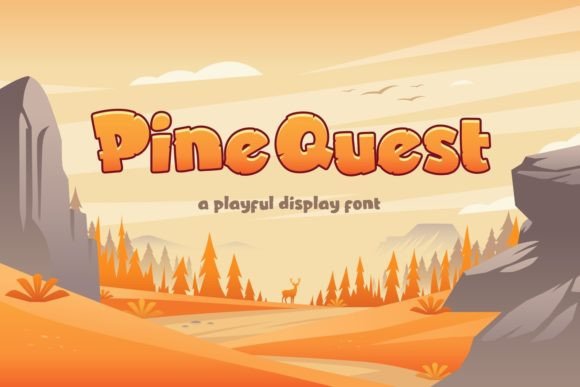
Pine Quest: The Playful Chunky Display Font for Adventure-Driven Brands
There’s something undeniably magnetic about a font that feels like it’s already telling a story before you’ve even read the words. That’s the kind of energy Pine Quest brings to the table—a playful, chunky display typeface that channels the spirit of exploration, childhood wonder, and bold creative choices. Inspired by the joy of adventure, its light chipped shapes give each character a handcrafted, tactile quality that stands out in a sea of clean, minimalist fonts. If you’re working on a project that needs personality, warmth, and a touch of whimsy, this might just be the typeface you’ve been looking for.
A Typeface Built for Projects That Demand Personality
What makes Pine Quest visually appealing isn’t just its chunky silhouette or its adventurous vibe—it’s the subtle imperfections. Those light chipped edges on each letterform add a layer of authenticity that feels human, not sterile. It’s the typographic equivalent of a hand-painted trail sign in a national park or a vintage camp patch sewn onto a backpack. This isn’t a font that tries to be everything to everyone. Instead, it leans into a specific aesthetic: playful, rugged, and full of character.
For designers and creators, that specificity is a strength. When you’re building a brand identity, launching a product, or designing marketing materials, a font with a clear point of view helps you communicate faster. Pine Quest doesn’t whisper—it announces. And in a crowded visual landscape, that kind of clarity can make all the difference.
Where Pine Quest Shines: Real-World Applications
Let’s talk practical uses. A font like Pine Quest isn’t just for display on a specimen sheet—it’s meant to be used in the wild. Here’s where it tends to make the biggest impact:
- Branding and Logo Design: If your brand has an outdoor, adventure, children’s, or artisan angle, Pine Quest can anchor your visual identity. Think outdoor gear companies, eco-friendly kids’ brands, indie game studios, or specialty food products with a rustic twist.
- Packaging: On a coffee bag, a granola box, or a craft beer label, this font adds shelf appeal. Its chunky forms hold up well at various sizes, and the chipped texture gives packaging a tactile, premium feel even in digital mockups.
- Social Media Graphics: Instagram stories, YouTube thumbnails, Pinterest pins—these are spaces where grabbing attention in milliseconds matters. Pine Quest’s bold, friendly shapes make it ideal for headlines and callouts that need to pop.
- Merchandise and Apparel: T-shirts, tote bags, hats, and stickers are natural homes for a font like this. Its adventurous spirit lends itself well to lifestyle brands and creator merch.
- Event Invitations and Editorial Layouts: Birthday parties, outdoor weddings, adventure-themed magazines, or children’s book titles—Pine Quest brings a sense of fun and occasion without feeling overly formal.
- Web Design and Blogs: Used sparingly for headlines or featured text, it can break the monotony of standard sans-serif body copy and inject energy into a blog header or landing page.
How the Right Display Font Supports Your Goals
Choosing a font isn’t just about aesthetics—it’s about strategy. The typography you select directly influences how your audience perceives your brand, how readable your content is, and how cohesive your visual presence feels across platforms.
Pine Quest, as a premium display font, works best in contexts where you want to evoke emotion and create a memorable impression. Display fonts are designed for impact, not extended reading. That means they’re perfect for headlines, logos, and short bursts of text, but they’re not your go-to for body copy. Pairing Pine Quest with a clean sans-serif or a simple serif font for longer text blocks creates a balanced, professional presentation that guides the reader’s eye naturally.
Visual consistency is another key benefit. When you use a distinctive typeface like this across your brand touchpoints—from your website header to your Instagram graphics to your packaging—you build recognition. Over time, your audience starts to associate that font style with your brand, even before they read the words. That’s the kind of subconscious branding that sticks.
Practical Tips for Using Pine Quest Effectively
Before you drop Pine Quest into your next project, here are a few things worth considering to get the most out of it:
- Test It in Context: Don’t just look at the font in isolation. Mock it up on your actual project—whether that’s a business card, a website banner, or a product label. How does it feel at the size you’ll be using it? Does it maintain its charm when scaled down?
- Pair Thoughtfully: A chunky, playful display font like Pine Quest pairs well with understated companions. Try it alongside a geometric sans-serif for a modern feel, or a simple handwritten font for a more casual, approachable vibe. Avoid pairing it with other highly decorative fonts—that’s a recipe for visual chaos.
- Check Your Licensing: If you’re using Pine Quest for commercial work—client projects, products for sale, paid marketing materials—make sure you have the appropriate commercial license. Many premium fonts offer different tiers depending on usage, so it’s worth confirming before you launch.
- Review All Included Styles: Some versions of display fonts come with alternates, ligatures, or multiple weights. Take a few minutes to explore what’s included in your download. You might find stylistic options that give your design an extra edge or help you solve a layout challenge.
- Think About Readability: Chunky display fonts are attention-grabbers, but they can become hard to read if used at small sizes or in long strings of text. Reserve Pine Quest for short, impactful moments—headlines, logos, pull quotes—and let a more neutral typeface handle the heavy lifting elsewhere.
Matching Typography to the Story You’re Telling
Every font carries a narrative. A sleek sans-serif might say “efficient and modern.” A classic serif might suggest “established and trustworthy.” Pine Quest says “let’s go explore.” That makes it a natural fit for brands and projects that want to communicate adventure, creativity, or a sense of playful discovery.
Consider the emotional tone of your project. Are you designing for a children’s educational app? A hiking blog? A line of artisanal trail mix? A summer camp brochure? In each case, the font you choose is doing emotional labor—it’s setting expectations before a single sentence is read. When the typography aligns with the message, the whole design feels intentional and cohesive.
On the flip side, if your project calls for a more serious, corporate, or minimalist tone, Pine Quest probably isn’t the right fit—and that’s okay. The best creative font choices are the ones that serve the project, not the ones that follow trends. Knowing when not to use a font is just as valuable as knowing when to use it.
Building a Versatile Font Library
If you’re a designer, content creator, or small business owner doing your own visual work, building a small but well-curated font library is one of the smartest investments you can make. Having a few reliable typefaces—a strong display font like Pine Quest, a versatile sans-serif, a readable serif, and maybe a script or handwritten option—gives you the flexibility to tackle almost any design challenge without starting from scratch every time.
Pine Quest earns its place in that library when you need a creative font that brings warmth, energy, and a sense of story. It’s not trying to replace your body text font or your corporate typeface. It’s the specialist you call in when the project needs a spark of personality—the kind that makes someone stop scrolling, pick up a product, or click on a link.
At the end of the day, great design is about communication. The fonts you choose are tools for telling your story, connecting with your audience, and making your work stand out. Pine Quest is one of those tools that, when used thoughtfully, can turn a good design into a memorable one. Whether you’re crafting a logo, designing a poster, or building a brand from the ground up, it’s worth having in your creative toolkit.