Attraction: A Modern Font with a Gothic Soul
You know the feeling. You’re scrolling through a feed, flipping through a magazine, or walking past a billboard, and something stops you. It’s not just the image or the words—it’s the way the words are presented. There’s a character, an attitude, a silent story being told by the letterforms themselves. That’s the power of a well-chosen typeface, and it’s the exact space where the Attraction font lives. It’s a contemporary display typeface that doesn’t just sit on the page; it makes an entrance, blending modern sleekness with a subtle, intriguing echo of gothic charm.
More Than Just Letters: The Visual Personality of Attraction
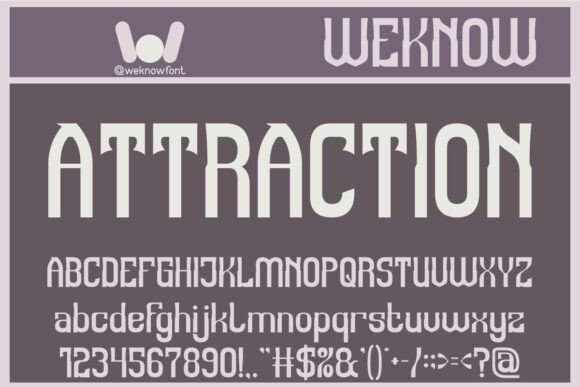
Think of Attraction as the cool, confident cousin in the font family. It carries the structural clarity of a modern display font, making it highly legible for headlines and logos, but it’s infused with decorative, almost metallic, details that give it a unique edge. This isn’t your standard sans serif font for body copy, nor is it a whimsical script font. It’s a premium font built for impact. The slightly condensed letterforms, sharp terminals, and subtle stylistic alternates create a feeling of sophistication and a hint of the dramatic. It’s this duality—being both contemporary and echoing a classic, almost architectural strength—that makes it so versatile. It can feel luxurious for a fashion brand, energetic for a music poster, or sleek for a tech startup’s logo. The key is that it commands attention without shouting.
Where Attraction Truly Shines: Real-World Applications
The true test of any creative font is how it performs in the wild. Attraction isn’t just a pretty face in a font specimen sheet; it’s a workhorse for specific, high-impact projects. Its decorative nature means it’s best used for headlines, titles, and branding elements where you want to establish a strong visual identity from the first glance.
- Branding & Logo Design: This is where Attraction can become the cornerstone of a brand identity. For a boutique clothing label, a high-end bar, or a graphic novel publisher, using this typeface in a logo instantly communicates a specific aesthetic—modern with a touch of rebellious elegance.
- Editorial & Packaging Design: Imagine the masthead of a cutting-edge design magazine or the title on a book cover for a thriller or fantasy novel. On packaging, it can make a product stand out on a crowded shelf, especially for items targeting a style-conscious audience, like specialty spirits, artisanal goods, or gaming accessories.
- Digital & Social Media: For YouTube thumbnails, Instagram story highlights, or website hero sections, Attraction cuts through the digital noise. It gives content creators and marketers a tool to create social media graphics that look professional and cohesive, boosting recognition across platforms.
- Events & Merchandise: Think concert posters, festival branding, or even merchandise like t-shirts and hats. Its bold presence translates perfectly from screen to print, making it ideal for marketing assets and digital products that need to look fantastic in both realms.
Integrating Attraction into Your Design Workflow
So, you’ve decided Attraction’s personality fits your project. Now what? Using a display font effectively is about balance and context. It’s rarely the right choice for long paragraphs of text, but it’s perfect for creating hierarchy and focus.
Font Pairing is Your Best Friend. The go-to strategy is to pair Attraction with a clean, neutral sans serif font or a classic serif font for body text. For example, using Attraction for a headline and a font like Helvetica, Open Sans, or Garamond for the accompanying copy creates a beautiful contrast that guides the reader’s eye. The display font grabs attention, and the body font delivers the information clearly. Always test your pairings in context—see how they look together on a mock-up of your website or a sample social media post.
Readability is Non-Negotiable. While Attraction is designed for clarity at larger sizes, always consider the viewing environment. Will it be on a small mobile screen? In a dark, atmospheric setting? Ensure there’s enough contrast between the text and its background. Sometimes, simplifying the design—using the font in all caps or choosing a less ornate stylistic alternate—can improve quick readability in a busy layout like a poster or a banner.
Understand What You’re Getting. A quality commercial font like this typically comes with a family of styles. Look for variations in weight (Light, Regular, Bold) and potentially italic versions. Check if it includes OpenType features like stylistic alternates, ligatures, or swashes. These features give you creative control to customize the letterforms for different applications, ensuring your use of the font feels unique and tailored.
License for Your Needs. This is a crucial, practical step. If you’re using Attraction for a client project, merchandise for sale, or a widely distributed digital product, you need to ensure you have the correct commercial license. Most premium fonts have clear licensing tiers based on usage (e.g., desktop, web, app, or print). Purchasing the right license protects you legally and supports the type designers who created the tool.
The Final Word: A Tool for Distinctive Communication
Choosing a font like Attraction is a strategic design decision. It’s about selecting a visual voice that aligns with your message and resonates with your audience. It won’t be the solution for every single project—that’s what versatile workhorse fonts are for. But when you need to inject a project with personality, drama, and a modern edge, it’s a powerful asset in your design toolkit. It helps build visual consistency across your brand, elevates the professionalism of your materials, and ultimately, helps your work get noticed and remembered. In a world saturated with generic visuals, a font with genuine character can be your secret weapon for making a lasting impression.